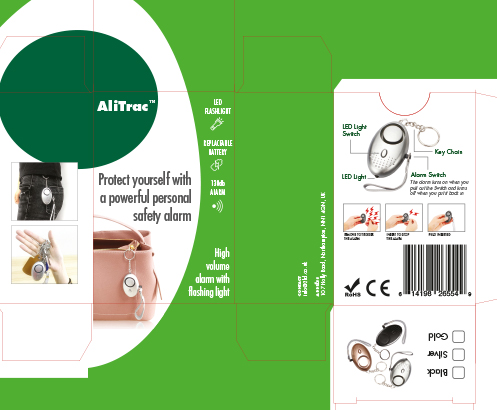
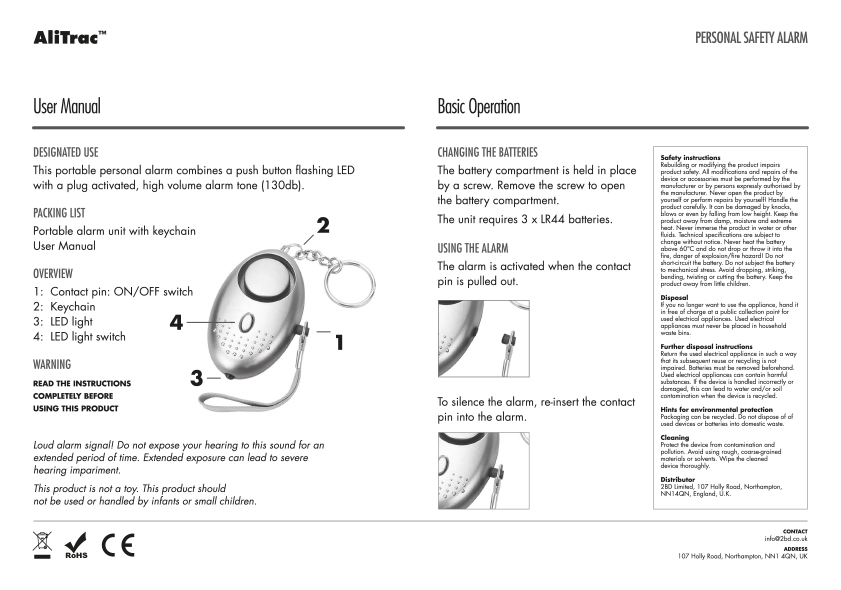
Creating a design from a packing template for a personal alarm.
Alitrac is a branding vehicle for BD Networking. Their first product was a rebranded personal alarm, combining an ultra high sound emitter with a flashing LED. The device would be perfect for vulnerable people travelling in potential hazardous areas or situations. Creating a design from a packing template was the main part of the brief but before I could do that I needed a logo.
Packaging comes with a unique set of challenges. Packaging projects are visually dense, with a huge number of elements needing to be incorporated into a relatively small space. This makes the potential for getting the visuals and the messages lost in the sheer overload of information compressed in such a small space,
Balancing these elements while maintaining visual impact is the needle that you have to thread.
I created the packaging using colours that were sympathetic with those of the main retailer, Lloyds Pharmacy. I received some assets from the product supplier, such as the product images and a few sales shots. They also helpfully supplied an accurate die-line for the artwork
In the end I used a graphic silhouette of the egg shaped product as a starting point.
Building a website and a brand at the same time – Mobile Wheel Clinic
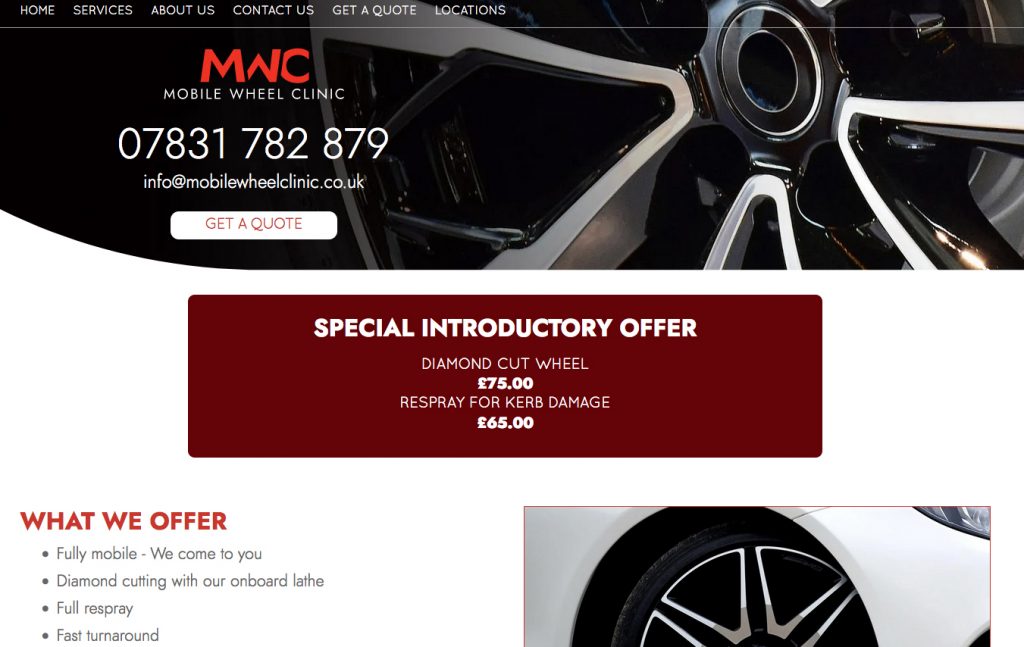
Mobile Wheel Clinic is a collaboration between one of my existing clients and a diamond wheel cutting specialist in the midlands. Building a website and a brand at the same time is not ideal but it can be done.
They came to me asking for a website. However, they also needed a corporate Identity. They didn't even have a logo at that point. So the situation required building a website and a brand at the same time.
One lesson that has stayed me for years is that a good design embodies one idea and one idea only. After a couple of false starts I realised to me that the logo should be sharp and aggressive. The company's main service is repairing wheels using a diamond sharp cutting blade mounted on a lathe and the logo had to reflect that.
So the logo became a visual expression of sharpness, and needed to be forcefully presented.
Building a website and a brand
So I went with Jost, a typeface based on Futura. It's a geometric sans serif with very sharp lines and angles. This was perfect for the Logotype. The next idea was to take the company's initials and cut sections of the lettering off. Given that cutting was the core of the company's offer, this seemed appropriate.
Finally I continued with the aggressive approach and went with black and red for the corporate colours. The client was very happy with this as they had found the alternatives to be somewhat insipid.
Once the Logo had been approved, I was asked to help with the livery for the company's main vehicle. This van would be their base of operations and as such, would be useful for advertising and brand building.
I took the idea of sharp edges and created a design underpinned by a blade running the length of the van. The most difficult thing was making sure that every aspect of the design would fit in with the various parts of the vehicle. Eventually we balanced all of the elements and the livery was complete.
This was the first opportunity to employ the logo out in the wild, as it were. I was very happy with the results.
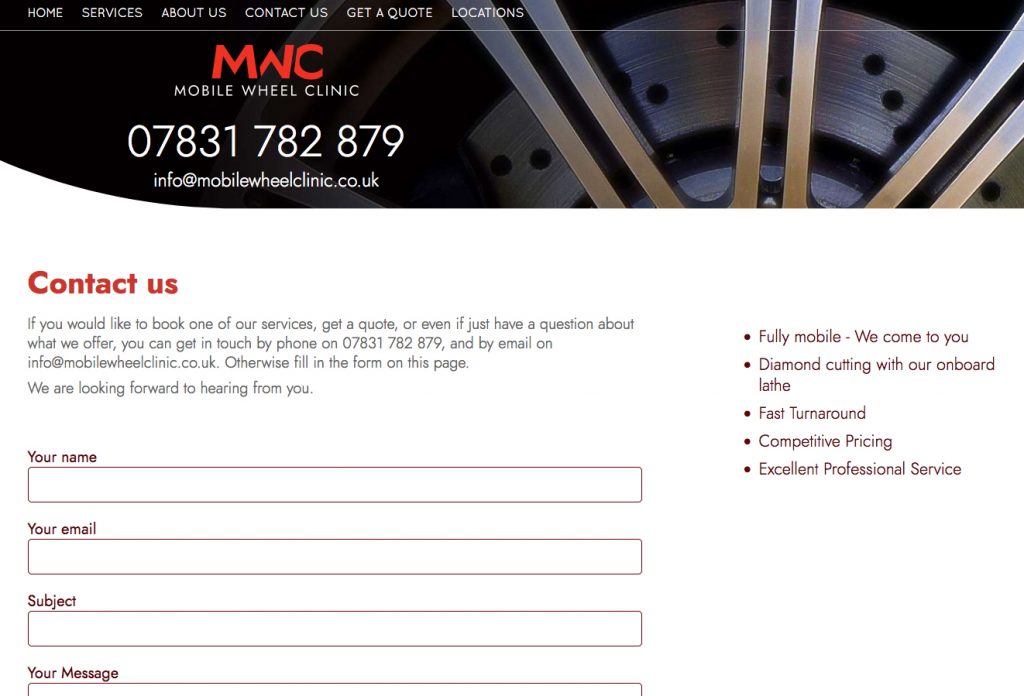
Once I had delivered the van artwork, I returned to working on the Website. The curved blade graphic that I had used for the van turned to be an ideal fit for the website as well.
This allowed me to use a lot of diamond cut wheel imagery as background images. The images give each page its own character.
As has become increasingly common, I ended up writing all of the copy for the site as well as designing and coding it.
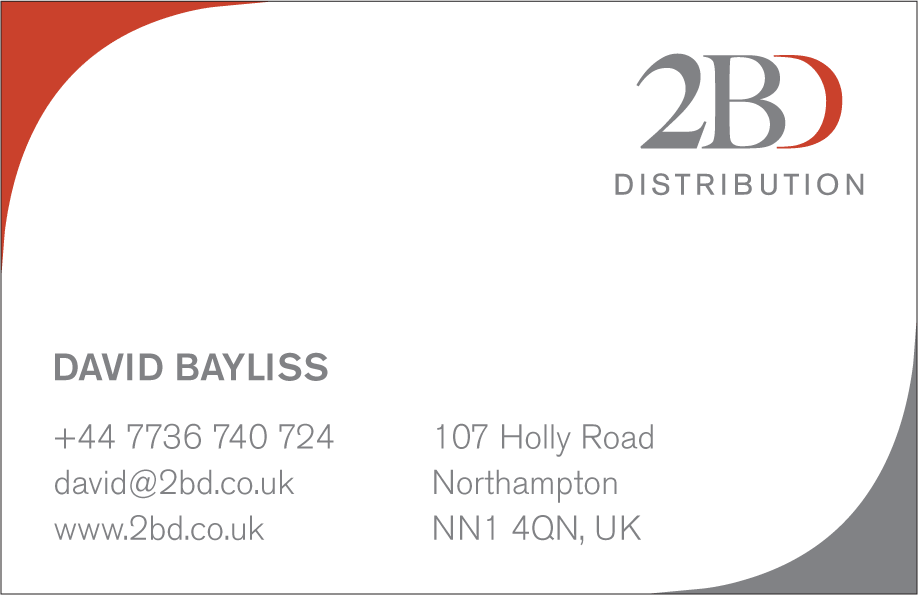
2BD Corporate ID – The usefulness of a business card
Corporate identity, like so many things, has become increasingly focussed on the digital aspects of branding. That said, for small business and especially start-ups there is still a lot to be said for the usefulness of a business card.
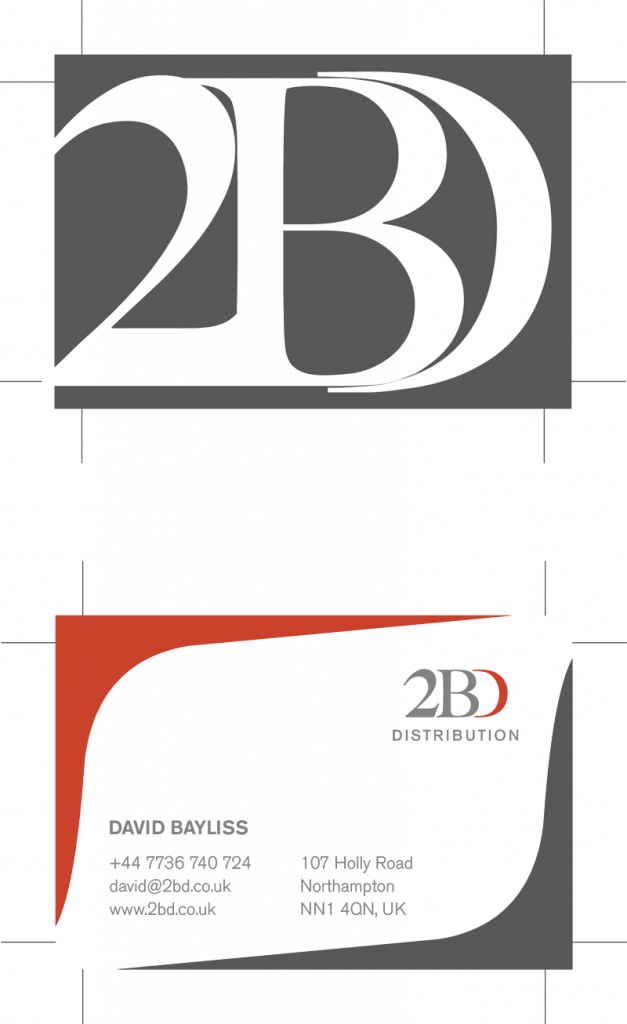
The usefulness of a business card is beyond doubt. A good business card works hard for you and your enterprise. It creates an impression and imparts a lot of useful information all condensed into 85 x 55 mm. For 2BD, I wanted to work with a purely typographic image that would be immediately recognisable while saving the rear of the card for all of the necessary corporate details.
My preferred solution was to do something that you rarely see on a business card, a photograph. Failing that I wanted to reduce the typographical elements until they became a purely graphic entity.
The client drew the line at the idea of a photo on the back of the business card so text as graphic it was.
I ended up overlaying the characters on top of each other and then enlarging them. This meant that they were severely cropped at the edge of the card.
The graphic flourish on the information of the card came about as a happy accident. I initially wanted to have those bleeding off the corners of the card. However the client didn't really like the visual. When I was tried to delete them from the artwork I ended up reducing them by accident.
This resulted in the basis of the final image with the two corners framing the text.
Victorian Pleasure Gardens History Boards
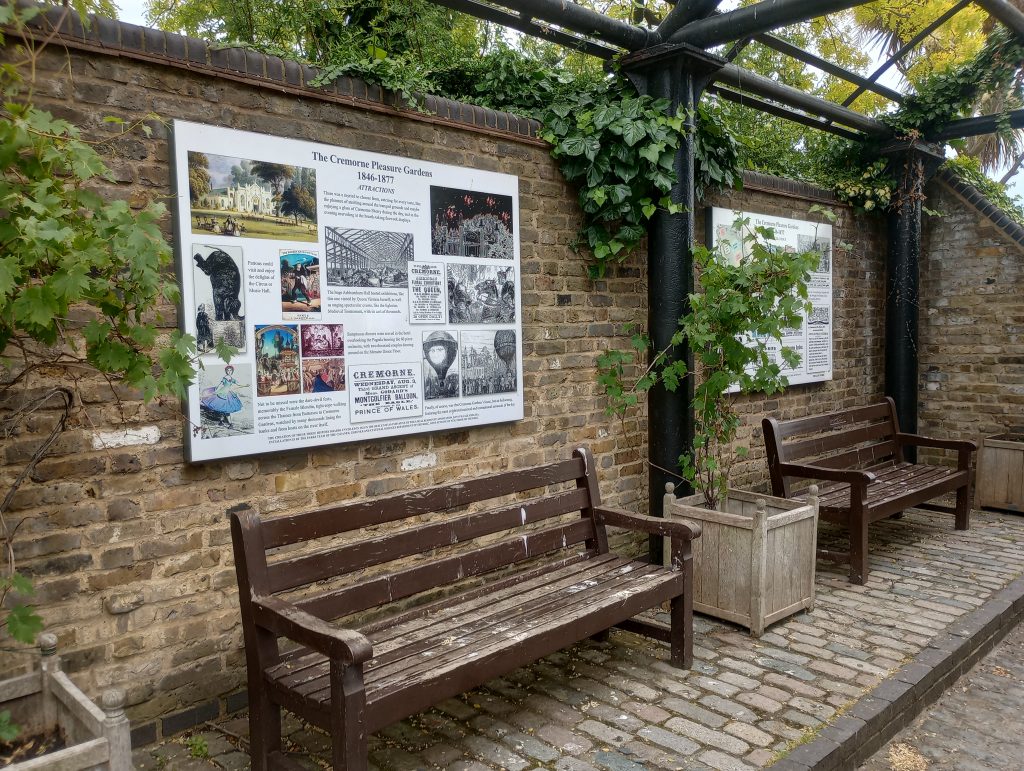
Cremorne Gardens was among the largest and most notorious of the many pleasure palaces that dotted London throughout the mid to late Victorian era. The Victorian Pleasure Gardens History Boards at Cremorne are a testament to the original park's history.
For more than three decades after it's opening in 1845, the park provided an extraordinary array of entertainments and events to the newly wealthy middle classes. They created an range of entertainments going from coffee by the river to a full-scale recreation of the battle of Sebastapol. The gardens eventually closed in 1877, due to local opposition to some the more disreputable aspects on display. Dubious pleasures such as bare knuckle boxing, gambling and prostitution. The idea of creating pleasure gardens history boards was the brainchild of a local resident.
Design
A local historian approached me with an idea to create three boards commemorating the history of the gardens. She planned to locate the boards in a gallery in the modern day Cremorne Gardens, a small public park on the banks of the Thames. This park is the last remaining tiny vestige of the original pleasure palace gardens.
She had already completed the designs but they were nowhere near the standard required for artwork. What she had produced were low resolution scamps created in Photoshop which worked as a starting point.
Artwork
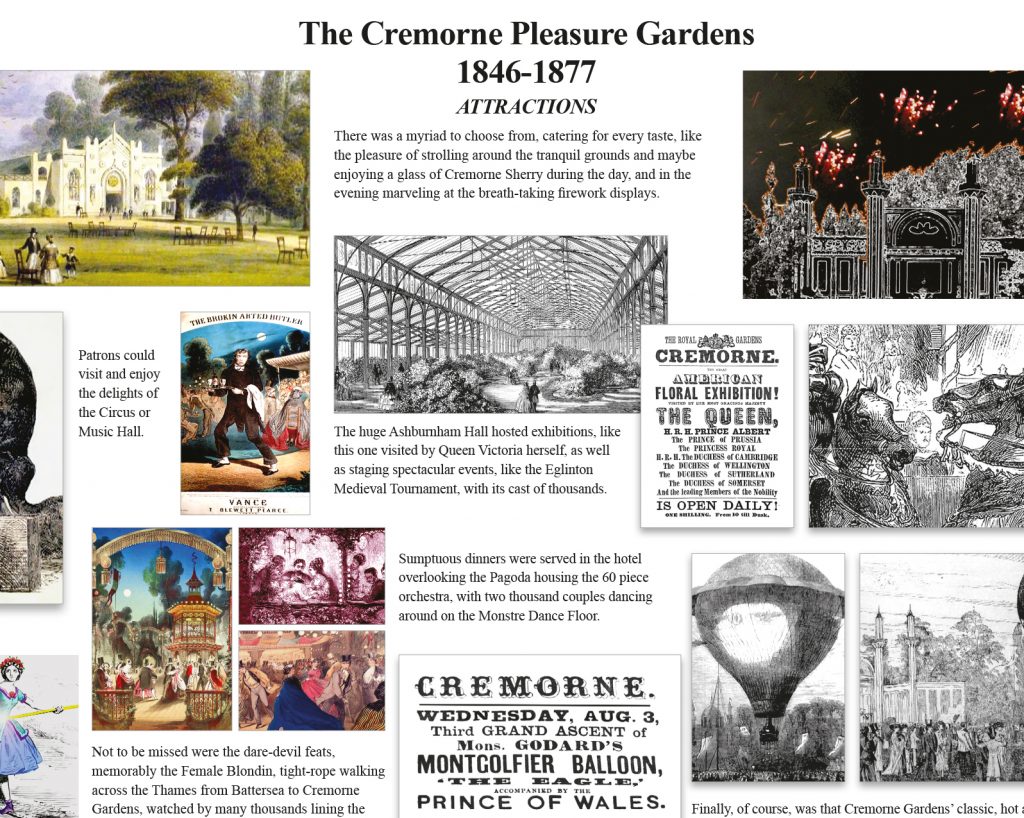
I re-created the boards from scratch, using a 12 column grid to align the somewhat chaotic elements. Grids provide a versatile structure for any changes and additions. My client was working with a number of local museums and other historians. Given the collaborative nature of the project, there were ongoing changes throughout the process.
Creating large boards on a small computer monitor means that you have no idea if they will work. Not once mounted on a wall in real size (the final artwork was 2A0).
Once the initial draft had been completed, myself and the designer went to the gardens. We were armed with a printout of one of the boards, tiled into A4 sheets. Then we spent an hour or so creating a full sized mock-up, taping the sheets onto the wall one by one.
This proved that the boards worked at full size in terms of layout and legibility.
Production
By the end we made a number of revisions and sent various versions to the banner company who would produce the final artwork. As a precaution I asked the banner company to sent me a photo of the final artwork as it came off the press. Normally I would prefer to be present as the artwork is created but that is often just not possible.
As is so often the case, the printers used one of the previous (outdated) versions of the artwork by mistake. However, this showed up on the photo and we notified the company to rectify this.
A psychologist, the tube map and the trouble with narrow definitions
Jordan Peterson is a well known clinical psychologist and self-help author. One of his favourite topics involves the nature of creativity as an aspect of one's personality type. His ideas are well thought out, even though framed within his own North American cultural biases.
As a result of these biases, he sees creative people as liberal and the lack of it as a conservative trait. Moreover, he proposes that pursuing your creativity is a very high-risk strategy in life, which he sees as the hallmark of a more liberal mindset. This brings us to the the trouble with narrow definitions.
The problem with this analysis is not that his conclusions are wrong, but that he seems to be basing them on a very narrow view of creativity. From the way he describes it, Peterson obviously thinks that creativity is uniquely found in artistic expression, and the the trouble with narrow definitions is that they lead to narrow conclusions.
For him, an architect would be creative whereas an engineer would not. A fine artist would be creative but not a draughtsman. He regards it as axiomatic that going to work every day is impossible for anyone of a creative bent. This is not my experience after thirty years of working in the creative industries.
In the early 90s I had the luck to work in the same office as the extraordinary graphic designer, Alan Fletcher. Fletcher understood creativity to be the ability to recognise connections that others simply do not see. However, he also recognised that making those links was a lot more commonplace than people realise. He once said to me that "everyone is a designer" and he was right.
Everyone includes you. Your home, your workspace, your clothes and your entire lifestyle require some degree of creative input. Irrespective of whether or not you flouting conventions, adhere to norms or subvert expectations, you are either choose means of self-expression or simply solve pragmatic issues in creative ways.
Peterson's idea of artistic creativity can also be misleading. An example would be an amateur painter, who is skilled with a brush. They spend their days faithfully reproducing landscapes. Despite appearances, there would be nothing remotely creative about such a person. Artistic yes, in a reductionist sense, but not creative.
So how does this link to the London Underground?
The Tube map – the map of the London Underground – is a creative solution that lies entirely outside of self-expression. Despite the fact that it displays a phenomenal grasp of visual acuity and technical skill, it is representational only as means of wayfinding. If you placed the tube map alongside a picture of hay wains rendered in oil on canvas, we know which one Jordan Peterson would pick as an example of creativity.
However, the Tube map perfectly represents the broader idea of creativity because it involves connections that are not immediately apparent. The map grew out of a need to render a complex system in simple, navigable terms. This is never an easy task and it would have proved to be impossible if not for a purely creative leap.
To understand this we have to examine the London Underground itself. Five separate companies built and operated the first tube lines. As a result, they did not get together to creates a composite map until the early years of the 20th century.
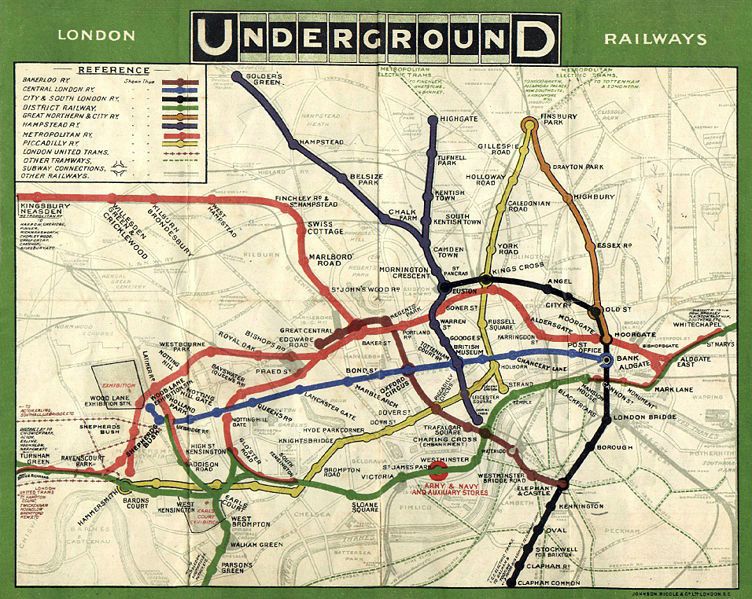
The map above was commissioned in 1907 by the five companies who were operating the various lines at that point. It should be noted that even though this early version of the Underground was only a fraction of the complex system that it would become, it was still an incredibly difficult task to represent it realistically against a physical map of London. It's a beautiful piece of work, both in design and execution, but it highlights the problems of rendering a complex system visually.
The real Tube map
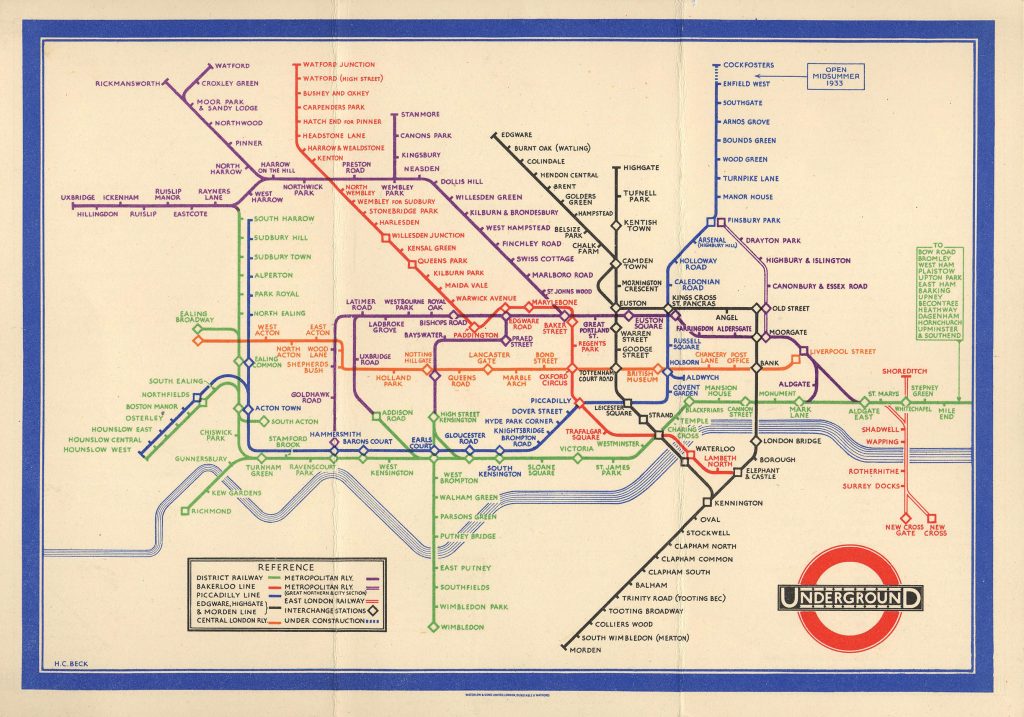
In the late 1920s Harry Beck, a draughtsman working for the London Underground, made the conceptual leap away from a geographical map to a topographical one.
Whereas geography concerns itself with physical spaces as a whole, topography is more concerned with the individual features of such a space. Beck understood that passengers were not interested in the actual physical distance between stations, only how many stops they would travel and where they should change trains.
His real leap was when he adapted a completely different discipline to meet his needs. He began to lay out the underground system as though it were an electrical diagram. He represented each station as part of a system while ignoring its actual geographic position. Then he incorporated the existing colour coding of lines in order to allow passengers to plan their journeys more effectively. Finally he used his draughtsman skills to realise his ideas.
The Tube map seems obvious to us now. However, when Beck took the idea to his managers they rejected it on the basis that is was too radical. Despite this early setback, once tube travellers got their hands on some test prints there was no going back. Public approval of the map was universal.
From 1933, London Underground mass produced the Tube map for the London public and has done ever since. The map's designers have accommodated all of the extensions and additions to the Tube in the nine decades since it was first introduced. Another testament to it's effectiveness is that virtually every municipal railway project across the globe has adopted the tube map as a template for their own maps.
Why is this important
Creativity is a huge factor in human development. It manifests in writers expressing their innermost landscapes, in teachers communicating with students, with engineers developing systems to bring architects' visions to life, and even for medical professionals searching for solutions within a pandemic.
These are just a few scattered examples of how creativity is intrinsic to progress.
In the end, the trouble with narrow definitions is that we cannot afford to narrow creativity down to artistic self-expression. It won't do us any favours as and when we face the challenges to come.
A tale of two pubs in need of a website – Part 2: The Harbour Inn Arley
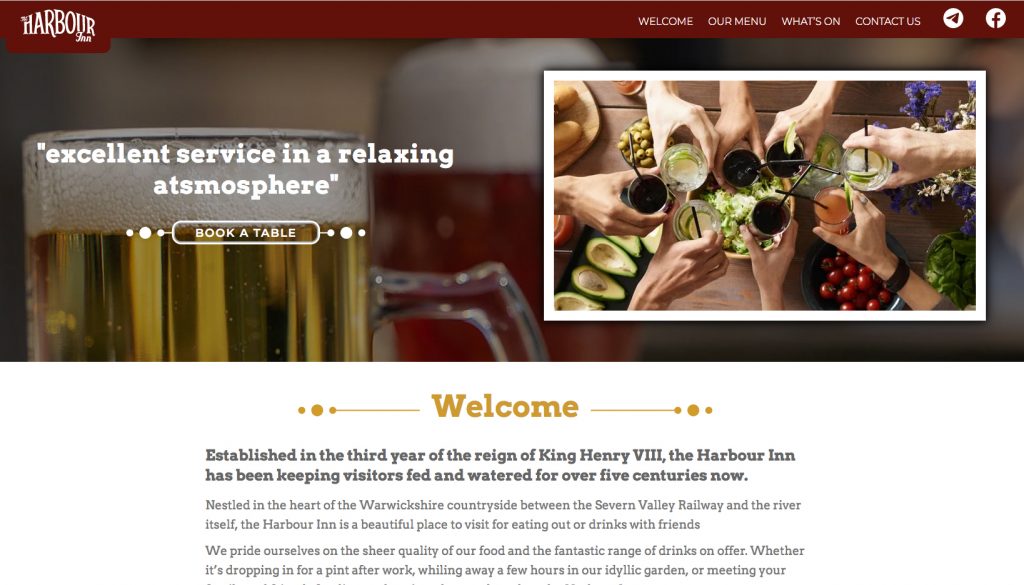
The second of the two pubs in need of a website was the Harbour in Arley.
This beautiful pub is situated up the river from the Ship and was a slightly more straightforward job as it is not an inn (despite the name). As the second of the two pubs in need of a website I decided to do this immediately after the ship as it was slightly more straghtforward.
I decided to go for a more layered, old-fashioned look for the site, with rich graphic elements underpinning the backgrounds on the home page.
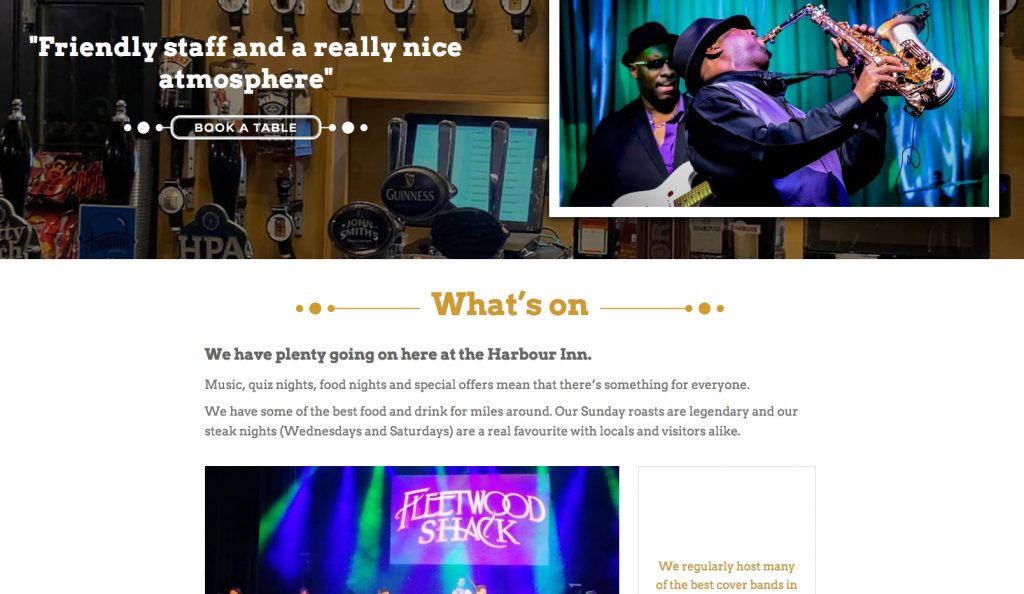
As with the Ship I was able to leverage the good will of their clientele by using quotes in the page headers.
Thaze Racing – Social Media templates and a break from habit
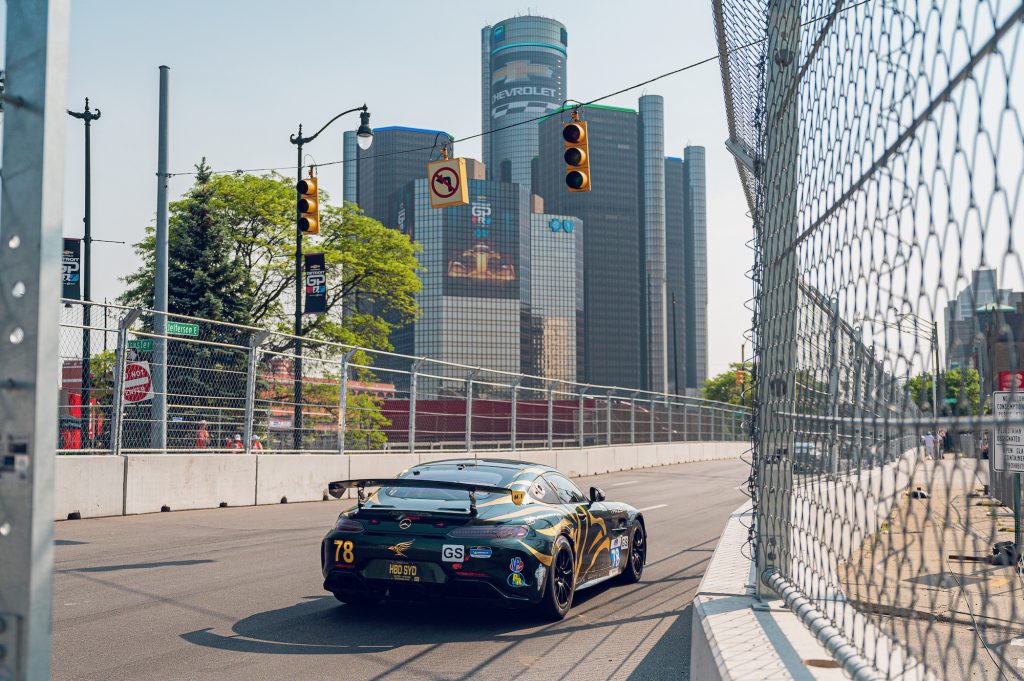
Thaze Competition are a Motor Sports team operating out of Detroit - who in their own words - are taking a fresh and irreverent approach to high octane racing.
They are currently running their gorgeous olive and gold Mercedes AMG in the IMSA Michelin Pilot Challenge series. For Thaze Racing Social Media templates were just another piece of their marketing puzzle, albeit a significant one.
Thaze are the third motor sports company I have worked with in the last 12 months. All three commissions came via 9 Sixty Two Media, a marketing company operating in The USA and Europe.
The client required a number of different social media templates in different sizes Portrait (1080 x 1920 pixels), Square (2025x2025 pixels), and Landscape (1920 x 1080 pixels).
The sizes above would cover social media assets for Instagram, Twitter and Facebook.
The templates would be produced as layered files in Photoshop and cover:
Quotes
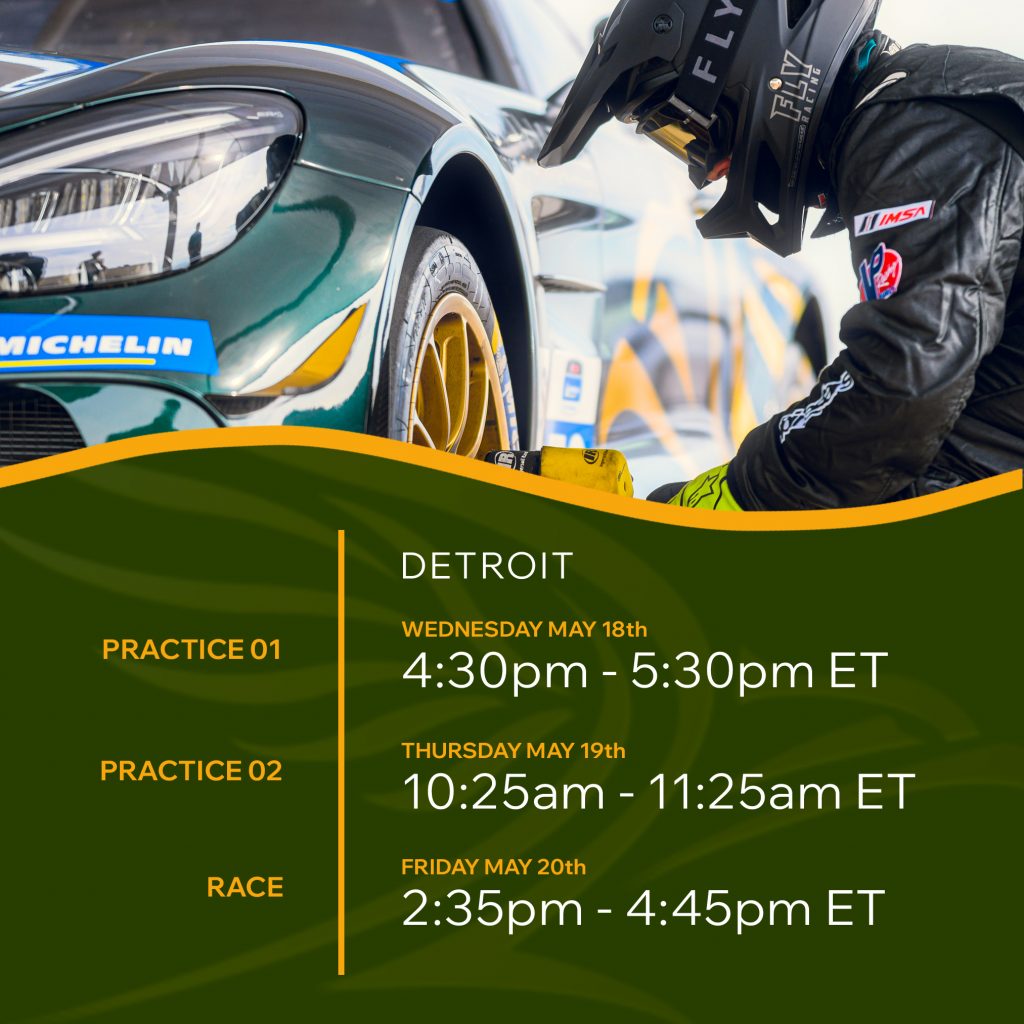
Race schedules
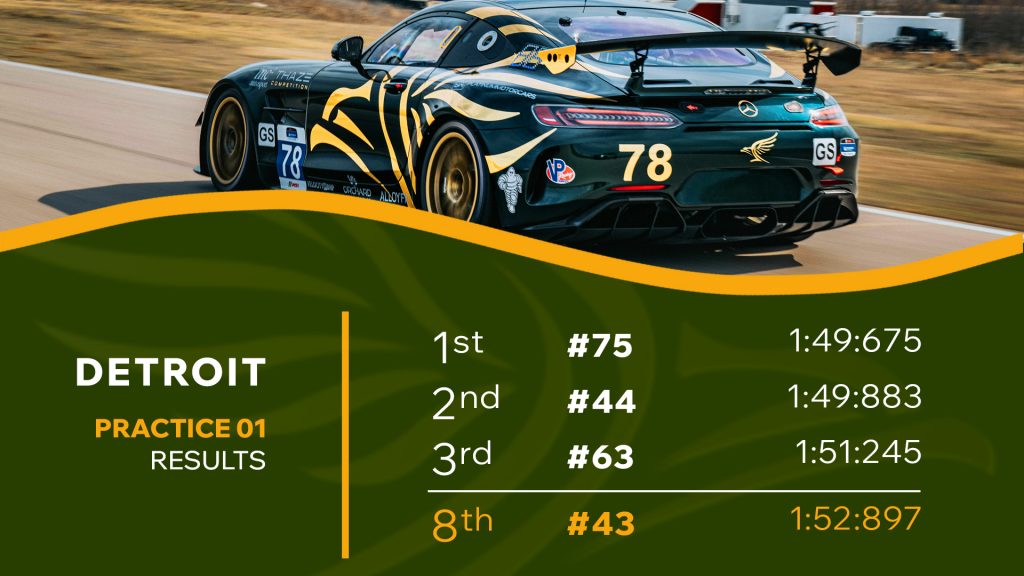
Qualifying results
Race results
Although the scope of the document was the same as the previous two jobs, the design approach was somewhat different.
The creative brief for all Thaze Racing Social Media templates included the usual caveats about keeping to the Corporate branding and creating assets that would be distinctive looking, sympathetic to the brand, appropriate to the audience, and of course, legible.
However, the agency wanted to move away from their signature design style, which they felt had been overused in recent projects. The agency favours a chaotic, multi-layered design style, with a emphasis on shadows, patterns, layers and transparent overlays.
The obvious solution was to use a flattened design, inspired by the car livery itself. My idea was to split the assets into two simple and discreet areas for images and text. The border between these lines was a thick curving line to represent a race track.
The only nod to the agency's previous design work and trademark style was a faded watermark of the Thaze logo lying behind the text.